




Lula Wins a Fourth Term, and Brazil’s Betting Ban Stays With the Government That Wrote It
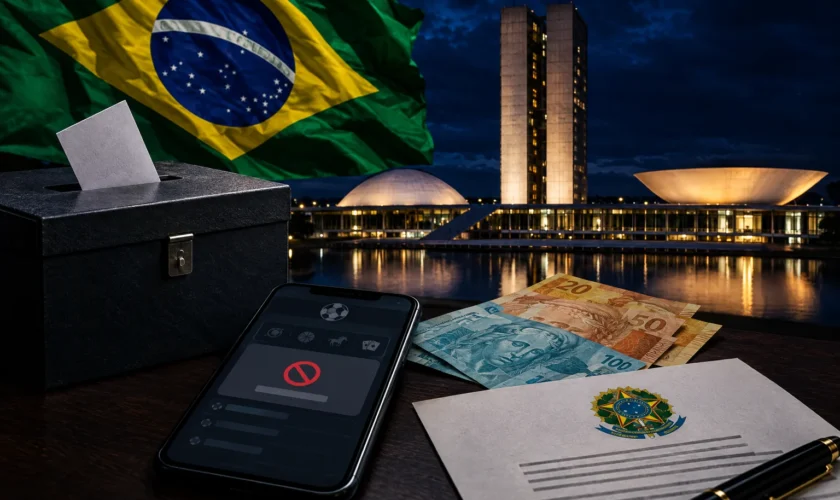
Luiz Inácio Lula da Silva won Brazil’s presidential runoff on Sunday, October 25, with 51.79% of valid votes and 64,256,232 ballots, the most any presidential candidate has received in the country. The same day, the 85 federal betting authorizations that Brazil’s betting ban set on a 30-day clock expired, and none of the operators gets its money back.
Lula made the ban part of his closing pitch. On a YouTube livestream on Thursday, October 22, with congressman André Janones and the finance influencer Nath Finanças, he said the bets “won’t come back” and added, in his own words, “Quem quiser ganhar dinheiro, vai trabalhar,” roughly “whoever wants to make money should go to work.” It was the same line he had run since he promised to end the bets in September.
Under Article 4 of Executive Provisional Measure 1,394/2026 (Medida Provisória nº 1.394/2026), signed on September 25, the 30-day transitional window governing 85 commercial authorizations officially elapsed on election day, permanently closing the regulated market without state indemnification or fee refunds for corporate operators.
A Contested Result
The win is not settled in everyone’s eyes. Senator Flávio Bolsonaro, who lost by more than 4.4 million votes, said on election night that he won’t recognize the result and will seek to annul it, citing a two-hour extension of voting ordered by Supreme Court Justice Cristiano Zanin. Lula’s new term begins on January 5, 2027.
Licenses Gone, Fees Kept
The legal instrument is Provisional Measure 1,394, signed and published on September 25. Article 4 ended every authorization granted under Law 14,790 thirty days after publication, which landed on Sunday. It says the termination arises from “motivo de interesse público,” a public-interest ground, and gives operators no right to a refund, “total ou parcial,” of the grant fee, nor to compensation from the state.
That’s real money. The government had granted 85 authorizations at R$30 million each, a total of R$2.55 billion, according to the Ministry of Health’s release on the signing. Licensed sites had to go dark on October 6. By that day only one of the 188 sites authorized until the night before was still running, the government said.
Players Mostly Paid Out
The wind-down for bettors is nearly done. More than R$1 billion in balances had gone back to players by October 10, leaving R$159 million for banks to return by October 14, with the state bank Caixa handling any refund the banks couldn’t make. Ninety percent of the remaining accounts held less than R$1.
The companies still have paperwork. Under Ordinance 3,005/2026, the Finance Ministry’s Secretariat of Prizes and Betting gave former operators until December 15, 2026 to settle their financial and regulatory obligations.
Evolution Turns Off Its Brazil Studio
The ban has reached suppliers too. In its third-quarter report, published on October 23, Evolution said “Brazil’s regulatory framework was rolled back following a decision by the president” and that, as a result, “our Brazilian studio is temporarily closed.” The Live Casino giant put Brazil at “well below half of LatAm revenues” and reported group revenue of €526.1 million, up 3.7% on a year earlier.
Chief executive Martin Carlesund was blunter on the analyst call the same day. He said everyone was “flabbergasted about the situation in Brazil” and that it was “highly unfortunate that a populist agenda can overthrow a regulatory framework” that had been running for about a year and a half.
The Court and Congress Hold the Next Moves
The legal challenge is before the Supreme Federal Court as ADI 8027, a direct action of unconstitutionality brought by the National Association of Games and Lotteries. Justice Luiz Fux is the rapporteur. The docket shows a new filing on October 25 and the case sent back to Fux on October 26, with no ruling yet on the request to suspend the measure.
The government wants the ban kept. The Attorney General’s Office asked Fux to leave the measure in force, wait for the Prosecutor General’s opinion and hold a new public hearing first. Lower courts haven’t offered a way around it either. A federal appeals court judge lifted Stake’s injunction on October 9, citing a “regulatory asymmetry” if one company kept trading while the rest stayed shut.
A November Deadline in Congress
A provisional measure lapses unless Congress approves it. The Congress tracker gives lawmakers until November 23 to deliberate on MP 1,394, with the urgency regime starting on November 9. The joint committee that must review it has not been installed yet, and members filed 99 amendments before the October 13 cutoff.
The tax side cuts both ways for the government. Betting companies paid R$9.95 billion in federal tax in 2025, the Federal Revenue Service’s figures showed. The explanatory memorandum sent with the measure put the cost of the ban at R$1.541 billion in lost tax revenue this year, R$5.15 billion in 2027 and R$5.33 billion in 2028.
The R$2.55 billion the operators paid for their licenses is the one figure that doesn’t move. Under Article 4, it stays with the state.
Written by
Nick Hall
Nick's passion for fast paced action has seen him test Bugattis for professional car reviews for the world's biggest car magazine, to covering the high octane world of online casinos, gambling regulation and emerging Web3 trends.

Related News

The NBA Signs Kalshi, Polymarket and DraftKings as Its Prediction Market Partners

Nick Hall
Senior Editor

The Ho-Chunk Nation Opens Its $705 Million Beloit Casino After Years of Federal Approvals
Nick Hall
Senior Editor

Alberta’s Regulated Online Casinos Took C$122.1 Million in Their First 80 Days
Nick Hall
Senior Editor